Use a decision gate, not a shopping list
Start with the exact motorcycle’s instructions. Establish whether towing is permitted and whether the manufacturer provides applicable restrictions or ratings. If towing is prohibited, a commercially available hitch does not cancel that prohibition. If the documentation is silent, do not interpret silence as approval. Obtain authoritative clarification before proceeding, and consider reducing the carried camp instead.
Next, verify the legal position for the motorcycle, rider and trailer in every jurisdiction on the route. Relevant requirements can include vehicle eligibility, dimensions, mass, speed, registration, lighting, braking and coupling arrangements. Confirm insurance coverage for the intended configuration and any modifications. A trailer being roadworthy in isolation does not prove that it is permitted behind your motorcycle.
This page supplies no towing capacity, nose-load target, coupling design or approval certificate. Generic percentages and another rider’s successful trip are not substitutes for documented limits for the actual combination.
Check the complete mechanical combination
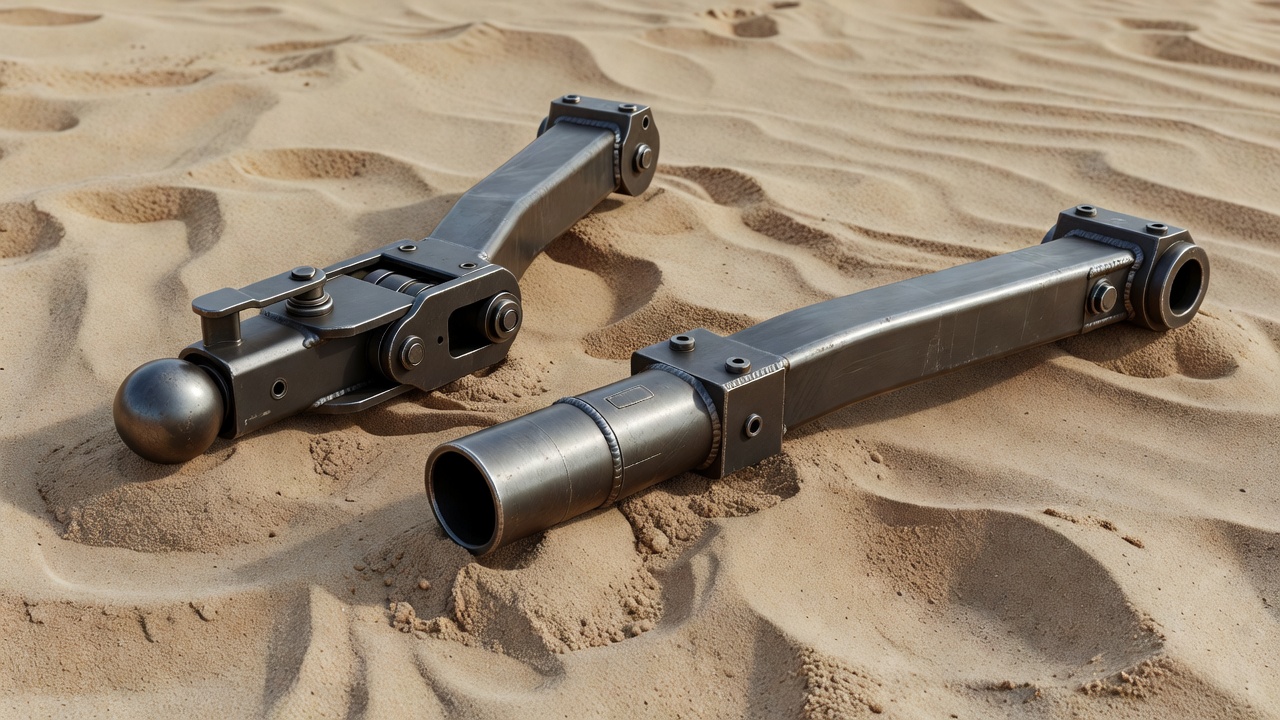
A motorcycle leans, pitches and changes direction in ways that a trailer coupling must accommodate without binding. The required movement depends on the hitch position, trailer geometry and operating envelope. A car-type coupling should not be assumed suitable merely because it connects to a ball. Use equipment specifically documented for the motorcycle application and confirm that the whole permitted movement range remains available.
The hitch must transfer loads into suitable points on the motorcycle without interfering with the wheel, suspension, brakes or exhaust. A luggage carrier is not automatically a towing structure. Do not attach a drawbar to a rear rack or improvise a coupling from a hardware-store joint. Fabricated hitch and trailer structures require competent design, appropriate manufacturing control and any applicable inspection or approval. This is not an appropriate area for trial-and-error load testing on the road.
Measure the trailer in travel condition
The trailer’s empty mass is only the beginning. Count its battery if fitted, spare wheel, support equipment, storage boxes, water, food and camping load. Use suitable weighing methods to establish laden trailer mass and the load applied at the coupling in the specified measurement condition. Compare these with every applicable vehicle, hitch, coupling, trailer, axle and tire limit. Follow the manufacturers’ procedures rather than transferring a car-trailer rule of thumb to a motorcycle.
Load position matters as much as total mass. Moving equipment can change the coupling load and stability without changing the scale reading for the whole trailer. Secure the contents against travel in every relevant direction, keep the arrangement within the documented distribution requirements and recheck after any change. Do not try to cure a stability problem by blindly adding weight at the front or rear.
Inspect the rolling and electrical systems
Check trailer tire specifications, condition and pressures using the trailer and tire makers’ instructions. Inspect wheel fasteners, bearings, suspension, structure and drawbar for damage or wear. Verify that the trailer tracks correctly and that the coupling locks and any required secondary attachment are installed as specified. Any braking system must meet the applicable requirements and be compatible with the motorcycle combination.
Lights, reflectors and the registration plate must satisfy the local rules and remain visible with the intended load. Electrical connections need appropriate circuit protection, weather protection, strain relief and routing. Modern motorcycle lighting circuits may not support a trailer connection without a compatible interface. Never tap into wiring simply because the lamp illuminates during a stationary test; have the system assessed and installed appropriately.
Expandable inspection note: secondary attachments and cables
Use the required attachment arrangement for the approved coupling and local rules. Verify routing through the entire permitted movement range without binding, dragging or reaching hot and moving parts. Do not improvise an anchor point on luggage hardware.
Road use begins only after verification
Even a verified combination changes acceleration, braking, maneuvering and the space needed to stop or park. Seek suitable instruction from someone competent with the particular type of motorcycle-trailer combination. Initial familiarization belongs in an appropriate controlled setting after all legal, mechanical and loading prerequisites are satisfied. It cannot prove an unassessed design safe.
If sway, weaving, unusual steering effort, coupling noise or a load shift occurs, reduce risk by stopping safely and investigating. Do not accelerate to “pull out” of an unexplained instability. Follow competent guidance for the combination and do not resume until the cause is understood and corrected. Repeated instability is a reason to stop using the system, not to accept it as a normal touring characteristic.
Use the right authority for the route
In Great Britain, start with GOV.UK guidance, the Highway Code and any relevant Driver and Vehicle Standards Agency information; use the exact applicable rules rather than an internet summary. For travel in the United States, consult the relevant state Department of Motor Vehicles and transport authorities; federal information from the National Highway Traffic Safety Administration does not settle every state towing question. In Australia, consult the road authority for the state or territory, such as Transport for NSW or VicRoads, together with applicable vehicle standards.
Keep the verified documents with the project record and recheck them before crossing borders or changing the equipment. If a lawful, documented combination cannot be established, choose a smaller carried camp, different transport or another travel plan. Declining to tow is a complete and reasonable project outcome.