Inventory before container
A compact camp begins with the route and expected conditions, not with an empty box that needs filling. List shelter, sleeping insulation, sleeping mat, water, food preparation, lighting, personal essentials and the tools appropriate to the motorcycle. Then add the items that are easy to forget: repair supplies, tent pegs, charging leads, food packaging, wet-weather layers and the bags used to organize everything. The luggage system itself belongs in the vehicle load ledger as well.
Weigh complete packed groups on a suitable scale. A tent specification may omit extra pegs, a groundsheet or repair components; a stove figure may exclude its fuel container. Record the departure state rather than a theoretical minimum. Water and food change throughout a trip, so consider the heaviest planned leg, especially where services are limited. Do not remove necessary drinking water merely to make an overloaded configuration appear acceptable.
| Group | Include | Check |
|---|---|---|
| Shelter | Tent, poles, pegs, repair items | Weather suitability and packed shape |
| Sleep | Bag, mat, dry sleeping layers | Expected conditions, not volume alone |
| Water and food | Full containers and provisions | Heaviest section between resupply |
| Cooking | Stove, cookware, suitable fuel container | Transport legality and fire restrictions |
| Support | Tools, first aid, lighting, communication | Route needs and practical competence |
Remove duplication, not resilience
Look first for equipment serving the same function twice. A large pan and several separate mugs may be unnecessary for a short solo journey, while a second reliable light may be justified on a remote route. The goal is deliberate redundancy rather than indiscriminate minimalism. Keep a written reason for unusual items; if the reason is simply that space remains, leave them out and reassess.
Compare packed mass as well as size when selecting replacements. A very small tool roll can still be dense, while a bulky sleeping bag may be relatively light. Compression sacks reduce volume but not mass, and excessive compression can make it easier to overlook how much the box contains. Use a consistent packing inventory so that replacements and last-minute additions are visible in the ledger.
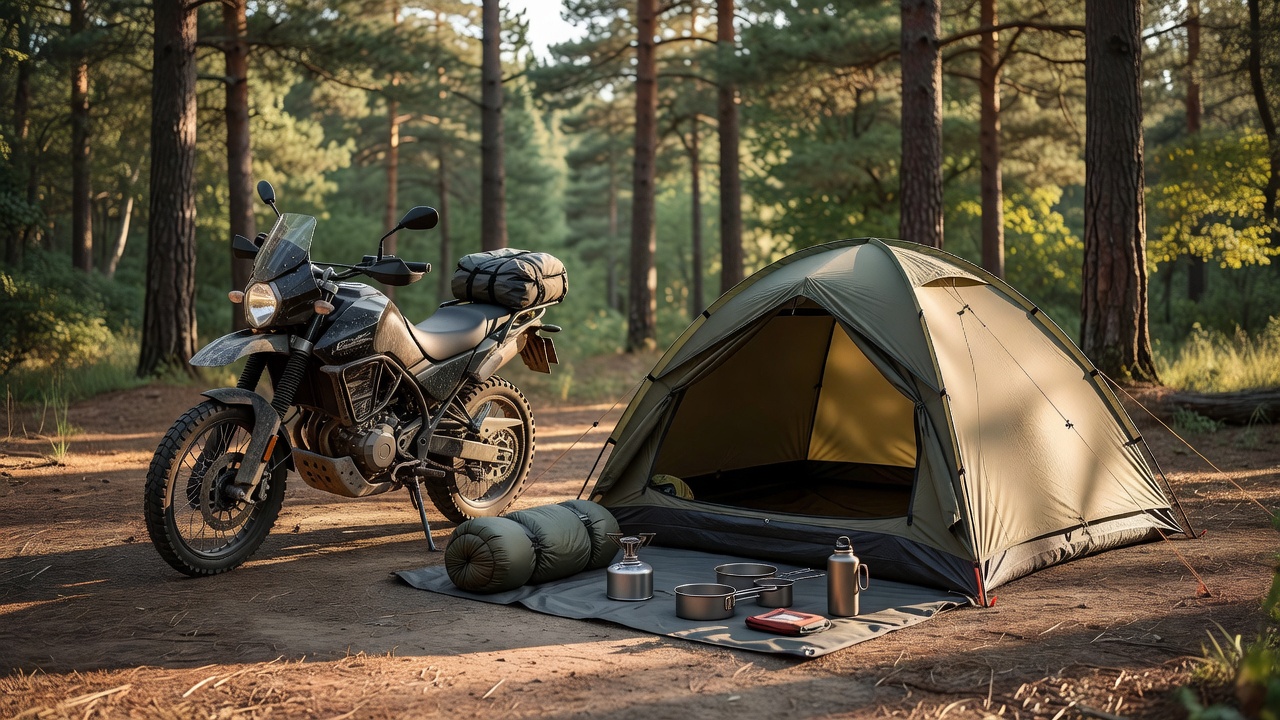
Pack for the ride and the stop
Place dense equipment low and near the motorcycle’s center where the approved luggage arrangement permits. Keep side loads balanced according to the manufacturer’s guidance and avoid a heavy rear top box simply because it is convenient to reach. Secure the contents inside each container so that a stop, bump or corner cannot turn loose equipment into a shifting load. Soft bags also need appropriate supports and clearance from the exhaust and moving parts.
Pack emergency and rain equipment where it can be reached without unloading the whole camp beside a road. Separate a wet tent fly from dry sleeping layers and protect items that can puncture a dry bag. Keep lids and closures unobstructed; forcing an overfilled box shut can damage a seal or prevent full latch engagement. After rearranging the load, repeat the retention and clearance checks.
Keep fuel and cooking outside the sleeping system
Use only fuel containers suitable for their contents and transport them as permitted by the vehicle instructions, container maker and applicable rules. Keep them secured, protected from heat and separate from food and sleeping equipment. Do not improvise petrol storage in a drinking bottle or assume that an airtight luggage box is an appropriate fuel locker. Check for leaks and damage before departure and whenever the system is disturbed.
Operate a stove outside, in an appropriate clear area and in accordance with its instructions and local restrictions. Never use a stove, barbecue or running engine inside a tent or other enclosed shelter. Carbon monoxide can be lethal, and an open flap does not make an enclosed cooking arrangement safe. Let equipment cool fully before packing and follow the stove maker’s refueling procedure away from ignition sources.
Expandable camp note: rain does not justify enclosed cooking
If conditions do not permit safe stove use, choose a no-cook meal, a lawful sheltered outdoor location suitable for the stove, or another safe alternative. Do not bring combustion equipment into the sleeping space to preserve a meal plan.
Verify the destination, not just the equipment
Land access, overnight parking, food storage and fire rules vary. In the United States, the National Park Service, U.S. Forest Service and Bureau of Land Management publish area-specific information. In Great Britain, Forestry England, Forestry and Land Scotland and Eryri National Park Authority provide guidance for their own areas. None of these names implies a general right to ride or camp wherever a map shows open land. Check the actual land manager, road status and current notices for your destination.
Plan the return load too. Wet equipment, waste carried out and groceries collected on the way can change both mass and distribution. Leave a sensible operating margin rather than packing to the last nominal allowance, but do not treat an arbitrary margin as a substitute for verified ratings. A local overnight shakedown, after load and fitment checks, can reveal awkward access and unnecessary duplicates without committing you to a remote itinerary.
At the end of the trial, write down what was used, what remained necessary but unused, and what had no useful role. Revise the inventory, reweigh it and keep that version with the load ledger. A smaller camp is a repeatable system, not a competition to carry the least equipment.